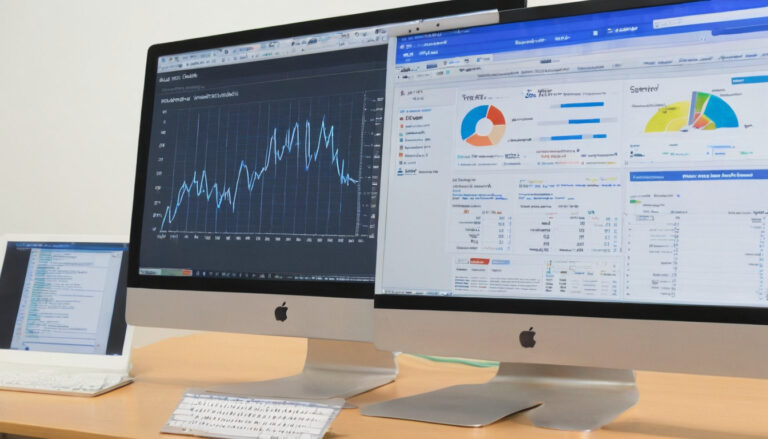
How to Set Up a Home Office in a Newly Rented Dubai Apartment
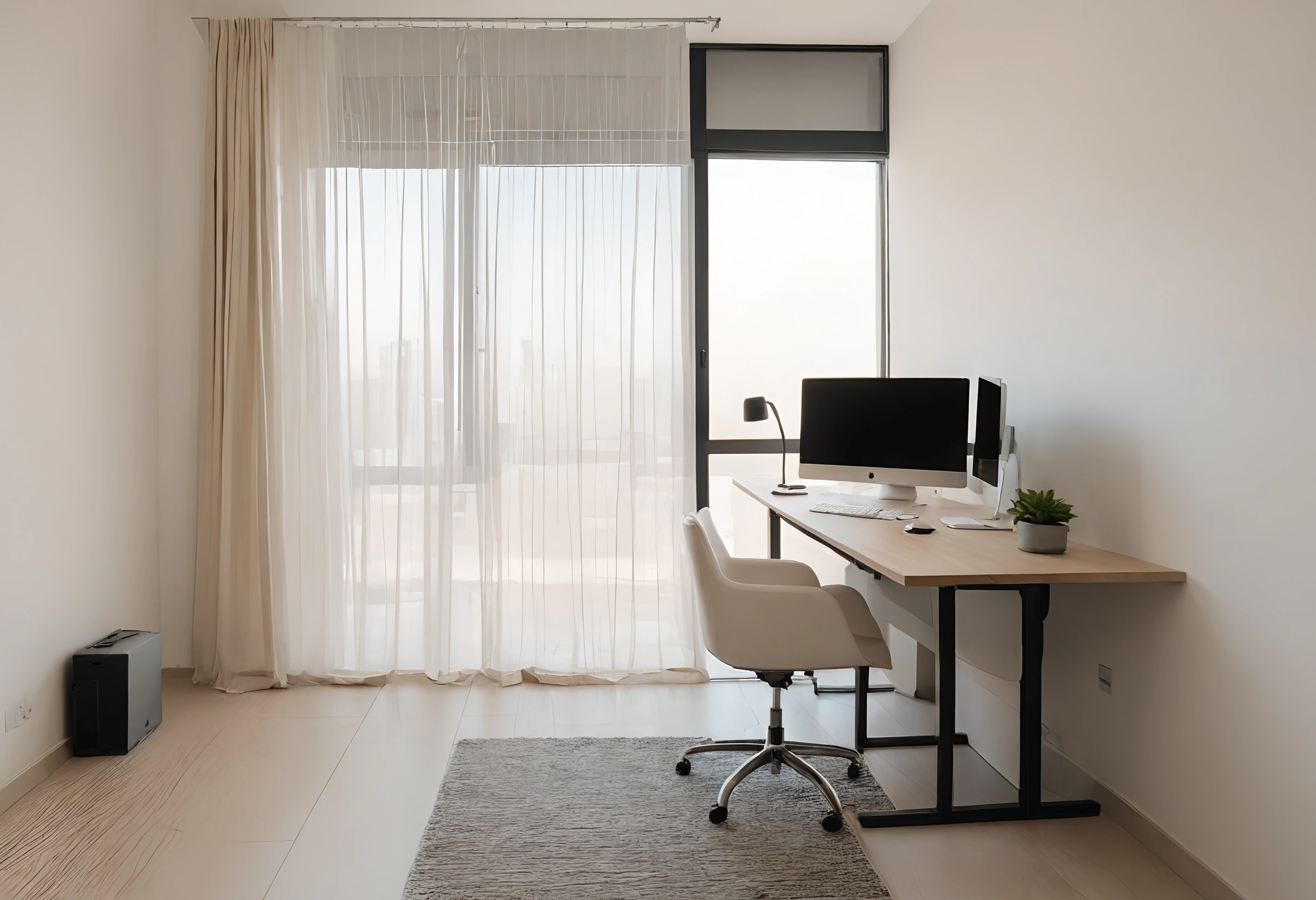
New tenants settling into a freshly signed lease need a practical method to build a workspace without breaching their contract. Dubai Land Department figures show 71,374 Ejari rental contracts registered between 1 and 25 October 2026, renewals included, which puts a great many desks into newly signed flats this month. Antonovich Group operates as an interior designer in dubai with 500+ projects delivered, ISO 9001 certification, in-house joinery and furniture production, and over 20 years of practice across architecture, interiors, landscape and fit-out. Readers exploring setup guides on EasyGateway lifestyle articles will find that planning a desk area starts with understanding both tenancy law and basic ergonomics.
Remote workers moving to the UAE often underestimate the restrictions attached to a standard residential lease. A home office requires specific furniture dimensions, correct lighting angles and the landlord’s permission before any wall-mounted shelves go up. Follow the tenancy law and the occupational health guidance here and the desk goes in without a dispute over the deposit. For broader relocation advice, the EasyGateway homepage covers multiple aspects of settling into life in the Emirates.
- Register the lease in Ejari first: the DEWA electricity and water account follows from it.
- Ask the landlord in writing before anything is drilled; clamp-on arms and freestanding desks need no permission.
- Set the screen 50 to 100 cm away with its centre 15 to 20 degrees below eye level.
What should a tenant sort out before the desk arrives?
Registration comes first, because the utilities depend on it. The UAE government portal explains that the electricity and water connection is linked to the Dubai Land Department, so once Ejari is issued DEWA emails the new account number, the security deposit details and a payment link. Work through the sheet below in order, then place the furniture.
| Item | What to do or specify | Where it is set | Source |
|---|---|---|---|
| Tenancy registration | Register the signed lease in Ejari and keep the certificate | Dubai Land Department | u.ae |
| Power and water account | Pay the deposit through the link in the DEWA welcome email sent after Ejari is issued | DEWA | u.ae |
| Wall fixings | Get the landlord’s permission before drilling for shelves or monitor arms (Article 19) | Lease and landlord | Dubai Law 26 of 2007 |
| Handover condition | Plan to return the flat as received, apart from ordinary wear (Article 21) | Lease | Dubai Law 26 of 2007 |
| Screen position | 50 to 100 cm from the eyes, top of the screen at or just below eye level, centre 15 to 20 degrees below the horizontal, no more than 35 degrees off to either side | Desk and monitor arm | OSHA |
| Chair fit | Leave a clenched fist (about 5 cm) between the seat edge and the calves; set armrests just under the elbows, bent at about 90 degrees | Chair | CCOHS |
What does Dubai tenancy law allow regarding apartment modifications?
Tenants need the landlord’s permission before altering a rented unit. Article 19 of Dubai Law No. 26 of 2007 states that a tenant may not make any changes to the property unless permitted by the landlord and after obtaining required licences from competent entities. Drilling holes for monitor arms or fixed shelving counts as a change under this rule.
Article 18 of the same 2007 law obliges the landlord to provide approvals a tenant needs to submit to official entities for decoration or other works, provided the modifications do not affect the building structure and the tenant holds the official documents requesting those approvals. Article 21 adds that the tenant must return the property in the condition received, apart from ordinary wear and tear. Freestanding desks and clamp-mounted accessories avoid permanent alterations entirely. Tenants seeking further context on living spaces can review guides covering how to enrich your life and home in the UAE.
How should a computer monitor be positioned at a home desk?
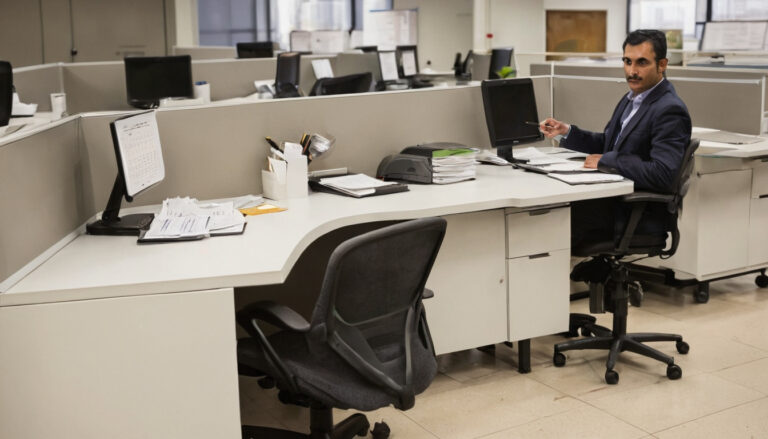
Screen placement directly affects neck strain and daily productivity. The OSHA Computer Workstations eTool advises placing the monitor directly in front of the user at a preferred viewing distance of 50 to 100 cm. The top of the screen should sit at or slightly below eye level, with the centre of the display angled 15 to 20 degrees below horizontal eye level.
OSHA further specifies that the screen must not deviate more than 35 degrees to the left or right of the seated user. Positioning the desk perpendicular to a window prevents direct sunlight glare on the panel. In many Dubai apartments, balconies face intense midday sun, making sheer curtains essential for diffusing light without darkening the room completely. A clamp-mounted monitor arm keeps the desk surface clear while allowing precise height adjustments within the recommended 50 to 100 cm range.
Which furniture choices suit a rented apartment workspace?
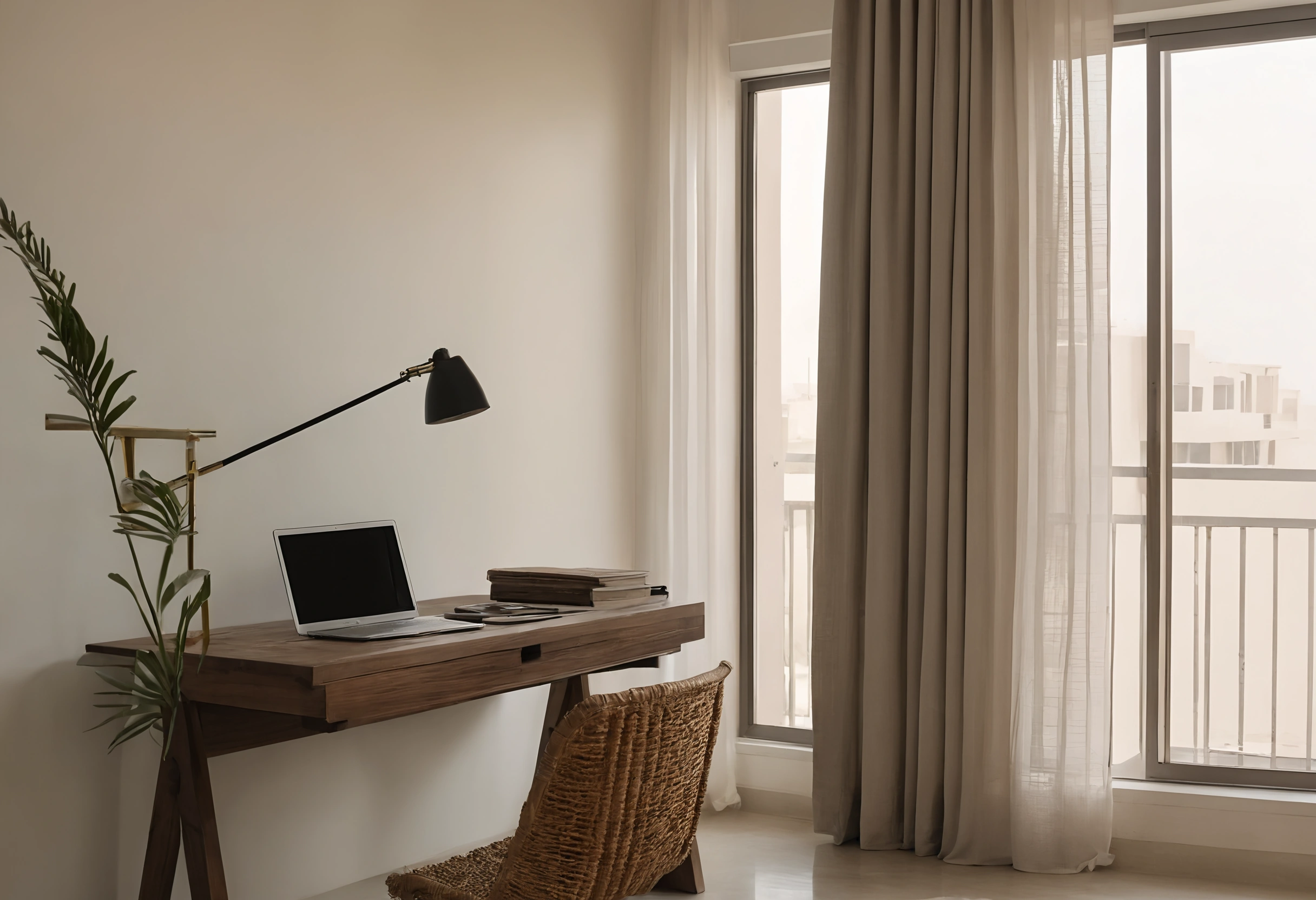
Selecting freestanding pieces protects the security deposit. Desks that fit tight corners without wall anchors are easy to find locally. A compact rectangular desk sized for one monitor, a keyboard and a notebook leaves enough floor space for a chair to roll back freely.
Closed storage units hide paperwork and cables, maintaining a tidy appearance when the workspace doubles as a living area after hours. Clamp-style monitor arms attach to the desk edge rather than the wall, satisfying the requirement under Article 21 to return the property undamaged. A short-term storage unit is another option for seasonal items that do not fit in a small flat.
How can tenants manage lighting and temperature for remote work?
Air conditioning runs for most of the working day in a Dubai apartment in October, so the unit’s airflow is a factor in where the desk goes. Positioning the desk away from the direct airflow of a split-unit vent prevents dry eyes and stiff shoulders during long typing sessions. Sheer curtains remain the most practical solution for balconies facing east or west, filtering harsh sunlight while preserving natural illumination.
Overhead ceiling lights in many rented apartments cast shadows directly onto keyboards and notebooks. Adding a small, adjustable desk lamp with a warm white bulb fills those shadows without introducing screen glare. Keeping the monitor perpendicular to the window, as OSHA recommends, ensures that changing sunlight angles throughout the day do not wash out the display. Combining these lighting adjustments with freestanding furniture allows tenants to build a comfortable workspace that complies fully with their Ejari contract obligations.